Broken Garage Door Spring Repair in Massachusetts
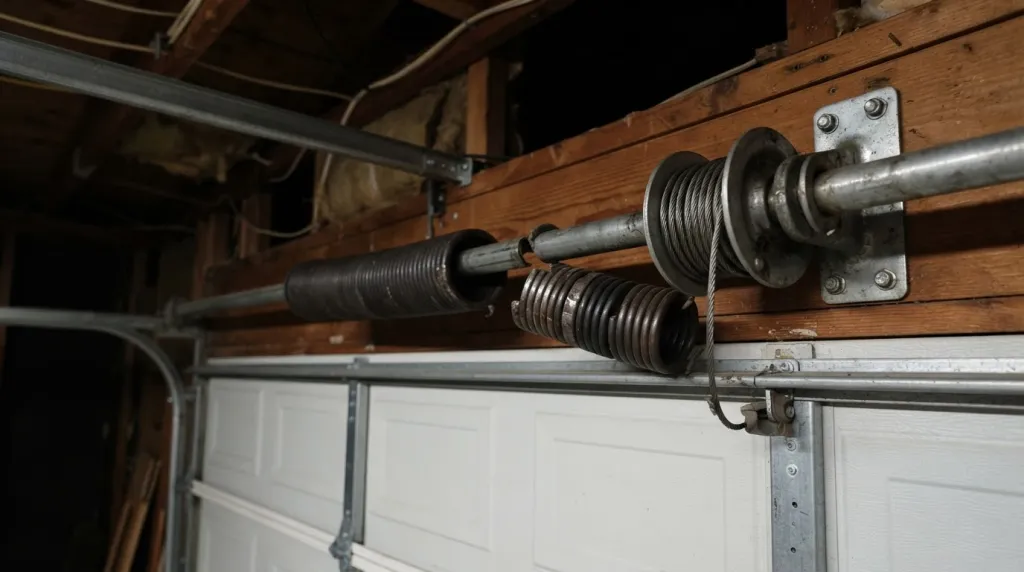
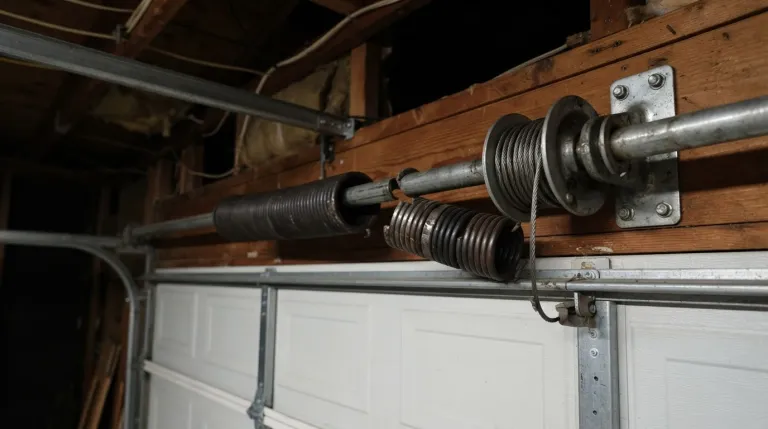
Springs do most of the lifting when a garage door moves. When one breaks, the door suddenly becomes far heavier than the opener was designed to handle, and the safest move is to stop using it until the system is inspected.
Signs your garage door spring is broken
- A loud bang from the garage, often when nobody was using the door
- A visible gap of an inch or more in a coiled spring above the door
- The opener hums or strains and the door lifts a few inches, then stops or reverses
- The door feels extremely heavy when you try to lift it by hand
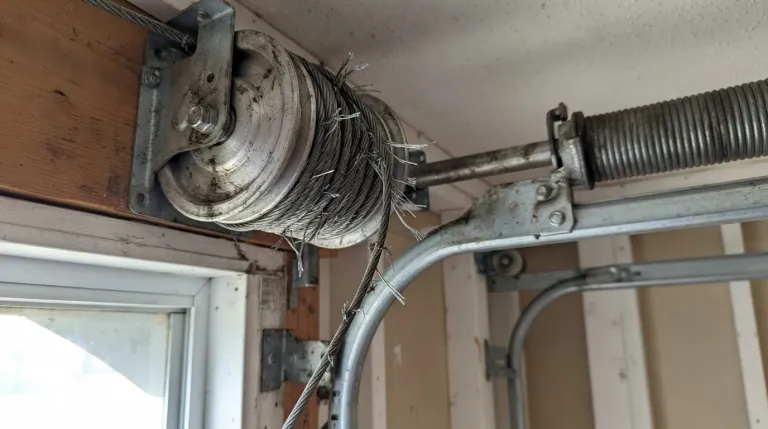
- The door rises unevenly or the lift cables hang loose
Torsion springs and extension springs
Most Massachusetts homes have torsion springs: one or two coiled springs mounted on a steel shaft above the door opening. Older and some lighter doors use extension springs that stretch along the horizontal tracks on each side and should have a safety cable running through them.
Both types are sized to the weight of your specific door. A door that has been insulated, re-paneled or fitted with windows may need different springs than it originally had, which is one reason replacement is not a simple swap.
Why springs fail
Springs are steel under constant tension and wear out with use. Many standard springs are rated for roughly 10,000 open-and-close cycles, so a door used several times a day can reach that point in a handful of years. Rust, cold temperatures and a door that is out of balance can shorten that life. When a door has two springs of the same age, the second one is often close to failing as well.
What a technician should check
- That the replacement springs match the door weight, height and drum size
- Lift cables, cable drums, bottom brackets and center and end bearings
- Door balance after installation (the door should stay roughly in place when lifted halfway by hand with the opener disengaged)
- Opener force and travel settings, plus the safety reversal test
What you should not do
Do not try to wind, unwind or adjust a torsion spring yourself, and do not loosen the bottom brackets that hold the cables. These parts store enough energy to cause serious injury. Avoid running the opener with a broken spring, because it can damage the opener and the door can drop. Keep people and vehicles clear and leave the door where it is.
What to tell us when you request service
- Your city and ZIP code
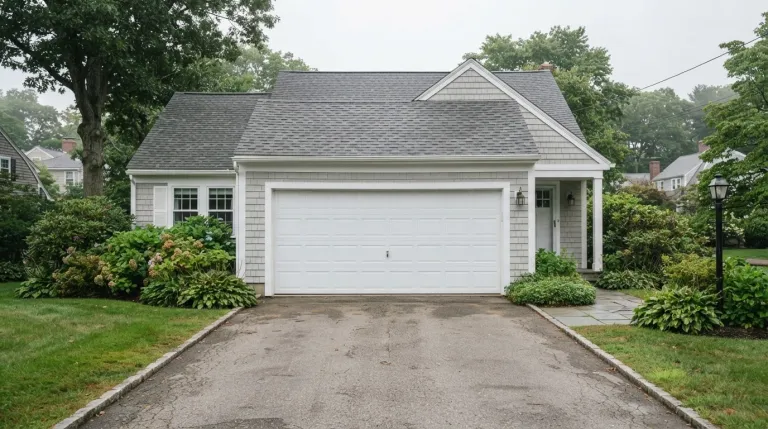
- Whether the door is a single-car or double-car door, and whether it is open or closed right now
- Whether you see one or two springs above the door, or springs along the side tracks
- Your opener brand if you know it, and anything that looks bent or loose
Common questions
Can I open my garage door with a broken spring?
It is not recommended. Without spring assistance the door is very heavy, can fall unexpectedly and can damage the opener. If a vehicle is trapped, request service and describe the situation so a technician can advise you.
Should both springs be replaced at the same time?
On doors with two torsion springs that were installed together, replacing both is commonly recommended because they have the same wear. A technician can explain the options for your door.
Helpful guides
- Broken Garage Door Spring: Symptoms, Risks, and Next Steps
- Frayed Garage Door Cables: Why You Should Stop Using the Door
- Garage Door Won’t Open? A Safe Step-by-Step Checklist
Service areas
We take service requests from homeowners across Massachusetts, including Boston, Cambridge, Quincy, Newton, Worcester, Framingham, Lowell and surrounding communities. Availability depends on your ZIP code and is confirmed when you request an appointment. See all service areas →
Need help with your garage door?
Describe the problem and your Massachusetts city when requesting service.