Garage Door Frozen Shut in Massachusetts: Safe Winter Fixes
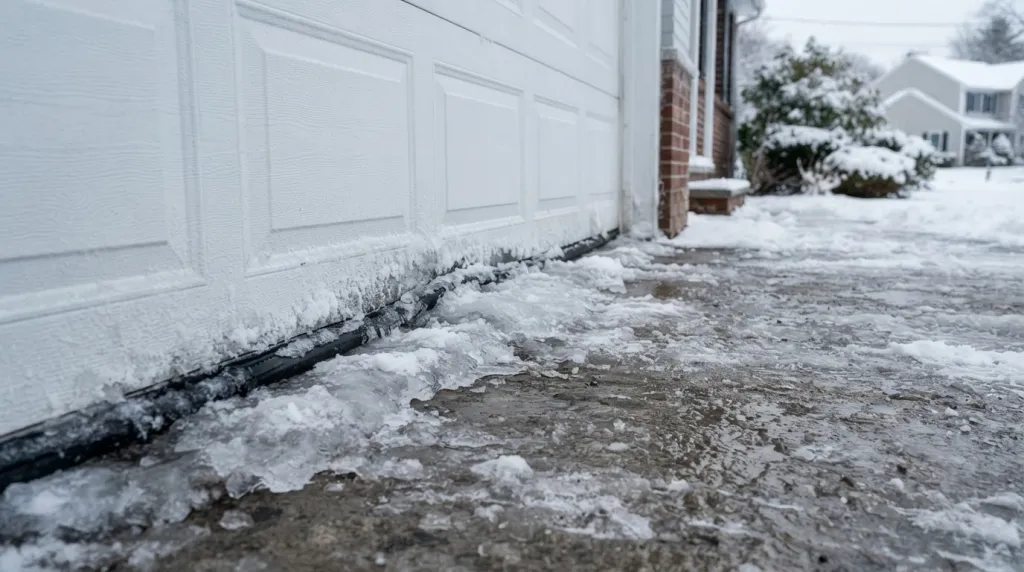
A frozen seal can make a perfectly functional door seem broken. New England freeze-thaw cycles also expose weak weatherstripping.
Why the bottom of the door freezes
Melted snow and slush collect at the threshold and refreeze overnight, bonding the rubber bottom seal to concrete. The opener may strain or reverse when you try to open the door. Stop immediately if the seal remains attached; pulling harder can tear the seal or strain the opener.
Safer first steps
Disconnect the opener from automatic commands while working near the threshold. Remove loose snow and ice from outside with a plastic tool, keeping hands away from the bottom edge. Allow mild warmth or time to loosen the bond. Avoid boiling water, which can refreeze and may damage materials, and do not use open flames.
Reduce repeat freezing
Improve drainage and sweep slush away from the threshold before nighttime temperatures fall. Check whether the bottom seal is cracked, flattened, or missing sections. A correctly fitted weather seal can limit drafts and water intrusion, although it cannot prevent every ice event.
When the problem is mechanical
If the door still will not move after the threshold is clearly free, a frozen seal may not be the only issue. Broken springs, worn rollers, or misaligned tracks can produce similar symptoms. Have a technician inspect persistent sticking or a damaged seal assembly.
Bottom line
Start with a careful visual check and simple manufacturer-approved steps. If the door is unsafe, mechanically damaged, or continues to malfunction, stop operating it and contact a qualified garage door professional. A proper diagnosis is safer and often more economical than repeated trial-and-error.
Need help with your garage door?
Describe the problem and your Massachusetts city when requesting service.