Garage Door Weather Seal Replacement and Winter Prep in Massachusetts
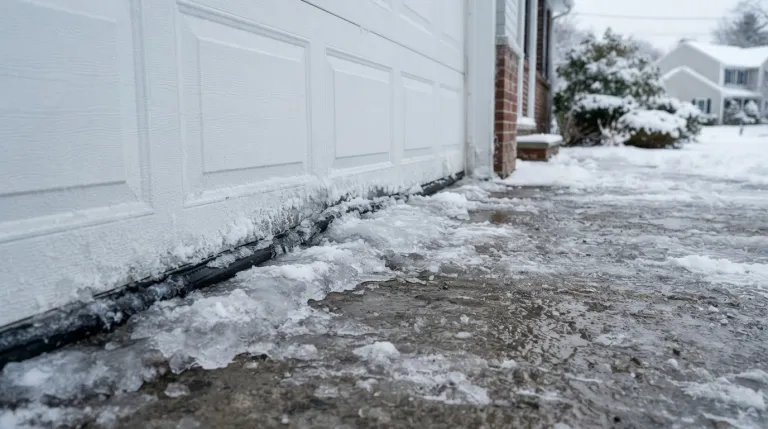
Massachusetts winters are hard on garage door seals. Freeze-thaw cycles, road salt and snowmelt wear down rubber and vinyl, and a worn bottom seal is one of the most common reasons a door freezes to the floor.
Signs your seals need attention
- Daylight visible under or around the closed door
- Cold drafts, leaves or water coming into the garage
- A bottom seal that is cracked, flattened, torn or missing in sections
- The door freezing to the floor after snow or rain
- Rodents or insects getting into the garage
The seals on a garage door
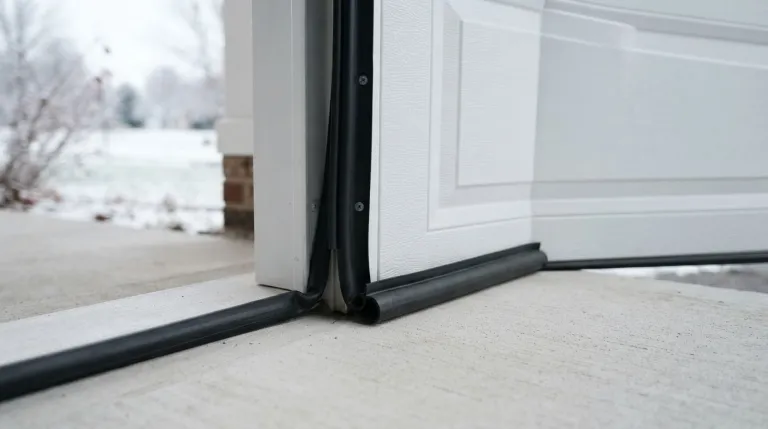
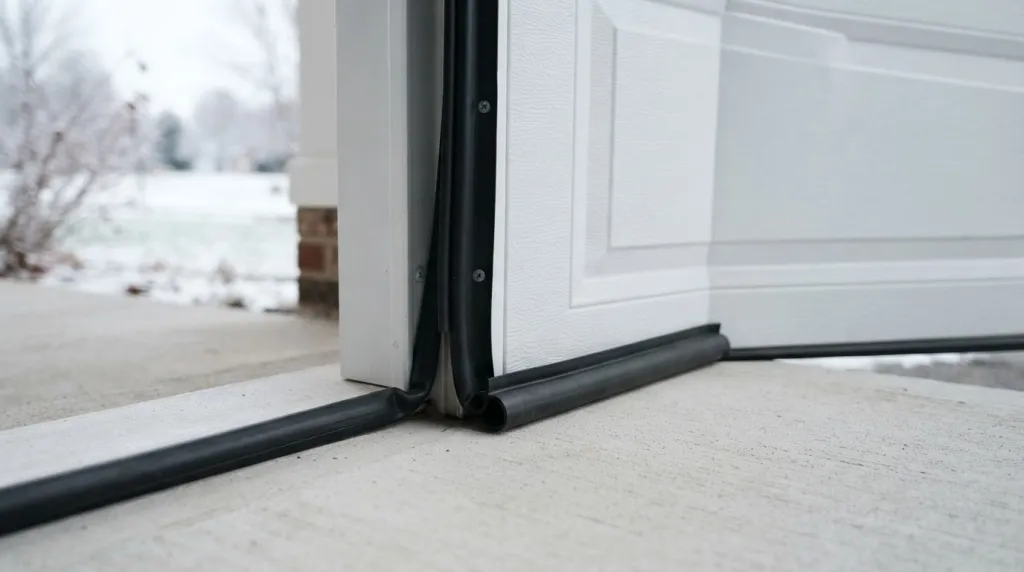
- Bottom seal: the rubber or vinyl strip on the bottom edge of the door, usually held in an aluminum retainer
- Perimeter (stop) molding: the flexible seal along the sides and top of the opening that the door closes against
- Threshold seal: an optional raised strip on the floor that helps with uneven slabs and water
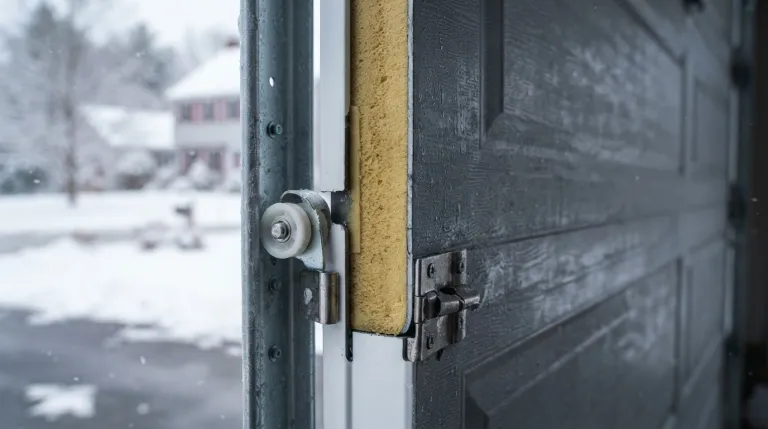
- Section seals: on many insulated doors, seals between the sections reduce air leakage
Choosing compatible parts
Bottom seals come in several profiles, and the replacement has to match the retainer on your door. If the retainer itself is bent or corroded, it may need replacement too. A slab that has settled or cracked can leave gaps no seal will close, which is where a threshold seal may help.
Winter preparation checklist
- Replace a worn bottom seal before the first hard freeze
- Clear snow and ice away from the bottom of the door and the threshold
- Do not run the opener repeatedly if the door is frozen down: it can strain the opener and damage the seal
- Lubricate rollers, hinges and springs with a garage door lubricant (not grease that thickens in the cold)
- Watch for slower or uneven travel in cold weather, which can point to balance or spring problems
If your door is frozen shut
Disconnecting power and gently freeing the seal with warm (not boiling) water or a plastic tool can help. Avoid metal scrapers and do not force the door with the opener. If the door still will not move, or it opens but moves unevenly, request service.
Common questions
How often should a garage door bottom seal be replaced?
It depends on material, exposure and use. Replace it when it is cracked, hardened, flattened or no longer touching the floor along its full width.
Will new seals make my garage warmer?
Sealing gaps reduces drafts and water entry. How much warmer the garage gets also depends on door insulation, walls and windows.
Helpful guides
- Garage Door Weatherstripping for Cold New England Winters
- Garage Door Frozen Shut in Massachusetts: Safe Winter Fixes
- Are Insulated Garage Doors Worth It in Massachusetts?
Service areas
We take service requests from homeowners across Massachusetts, including Boston, Cambridge, Quincy, Newton, Worcester, Framingham, Lowell and surrounding communities. Availability depends on your ZIP code and is confirmed when you request an appointment. See all service areas →
Need help with your garage door?
Describe the problem and your Massachusetts city when requesting service.