Garage Door Weatherstripping for Cold New England Winters
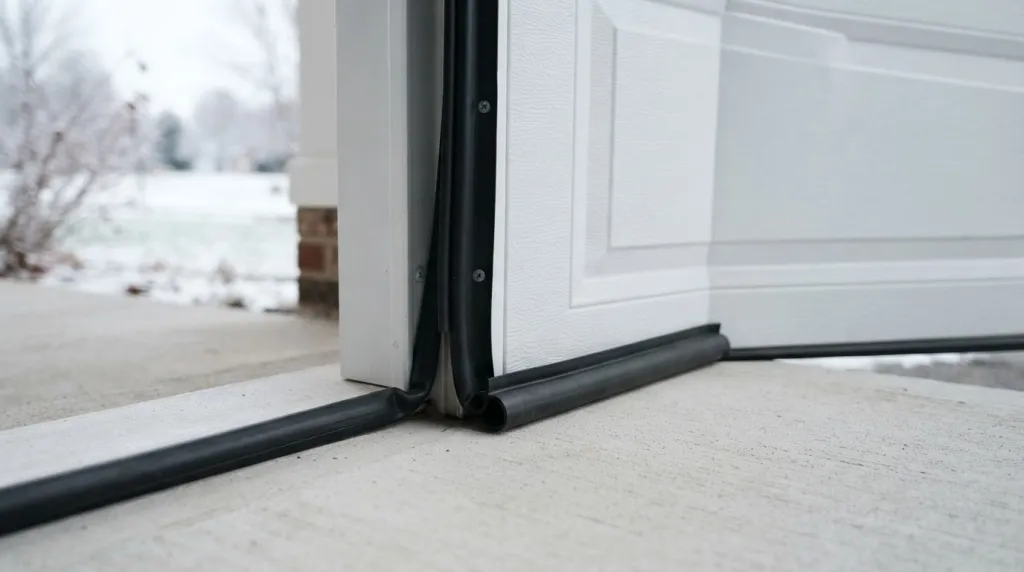
Weather seals help control drafts, water, debris, and unwanted air movement around a garage door.
Where air and water enter
Inspect the bottom seal for daylight, compression gaps, or hardened rubber. Look along the sides and top of the opening for gaps when the door is closed. On an uneven driveway, some daylight may indicate a threshold or drainage issue rather than a seal that simply needs to be thicker.
Choose compatible materials
Bottom seals come in different retainer profiles, including common T-end and bulb styles. Not every seal fits every garage door. Measure the width, photograph the existing track profile, and verify compatibility before purchasing. Side and top perimeter seals may use separate vinyl or rubber components.
Moisture matters as much as temperature
In Massachusetts, melting snow can pool near the threshold. Sealing alone cannot solve negative drainage toward the garage. Fix standing water and check the slope outside. Trapping moisture against wood or metal may create longer-term problems.
What homeowners can safely handle
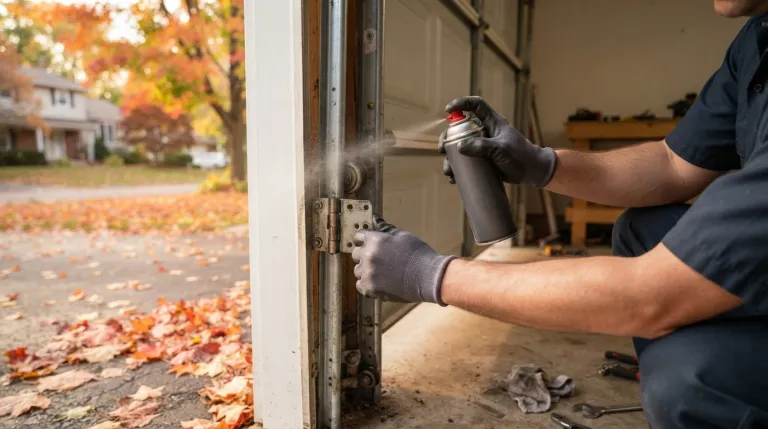
Cleaning the seal, removing debris, and inspecting for visible gaps are generally low-risk tasks. Replacing certain perimeter seals can be straightforward, but avoid loosening loaded door hardware or working near springs and cables. An inspection is sensible if the door no longer closes evenly.
Bottom line
Start with a careful visual check and simple manufacturer-approved steps. If the door is unsafe, mechanically damaged, or continues to malfunction, stop operating it and contact a qualified garage door professional. A proper diagnosis is safer and often more economical than repeated trial-and-error.
Need help with your garage door?
Describe the problem and your Massachusetts city when requesting service.